
Gastronomic Travel Experiences in Peru: From Coast to Andes
Where to find top gastronomic travel experiences in Peru?
The ideal culinary journey spans two distinct geographic anchors: the bustling Pacific capital of Lima and the high-altitude Sacred Valley near Cusco.
Lima acts as the urban epicenter of innovation, where visionary chefs transform local market catches into multi-course tasting menus. Conversely, the Sacred Valley offers grounded, pastoral experiences focused on soil preservation, ancient grains, and traditional earth-oven cooking.
Combining coastal and mountain destinations provides a complete picture of Peru’s biological wealth. The contrast between modern oceanfront dining and quiet valley harvests is what makes a Peruvian food tour so captivating.
How do top restaurants in Lima elevate traditional coastal flavors?
Lima is home to several of the world’s most acclaimed dining establishments, where culinary research centers on native ecosystems.
Acclaimed chefs collaborate with marine biologists, Amazonian foragers, and Andean farmers to source ingredients from specific altitudes and ocean depths.
- Multi-altitude tasting menus: Courses structured strictly by elevation, moving from ocean floor algae to high-mountain tubers.
- Nikkei and Chifa fusion: Creative interpretations blending Japanese and Chinese techniques with native Peruvian ingredients.
- Artisanal cocktail bars: Pisco-focused mixology incorporating native botanicals, passion fruits, and coca leaf infusions.
Reservations at world-class dining spots require booking months ahead. Innovative research drives coastal fine dining, turning local ingredients into edible art.
What immersive culinary activities await travelers in the Sacred Valley?
Leaving the city behind for the Sacred Valley opens doors to intimate hands-on food encounters deeply connected to the land.
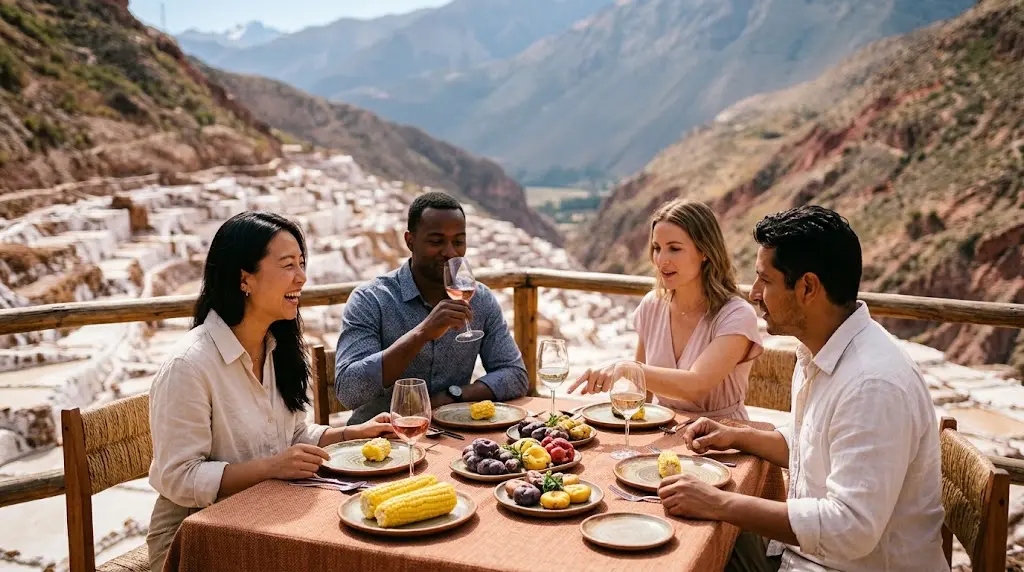
Travelers can walk through high-altitude seed banks, tour cooperative salt evaporation ponds, and participate in ancient cooking rituals led by local families.
Hands-on farming and ancestral cooking
Participating in a traditional Pachamanca feast built into mountain earth offers an emotional connection to food that no city restaurant can replicate.
Seasoning fresh valley vegetables with locally harvested Maras pink spring salt reveals the pure, unadulterated flavors of high-altitude agriculture.
How to plan a seamless foodie itinerary across Peru’s regions?
Building a successful culinary travel plan requires balancing urban restaurant schedules, highland acclimatization, and regional transportation logistics.
When mapping out key places to visit in Peru, allocate sufficient time in both coastal and mountain regions to experience local food culture without rushing.
- Spend two to three days in Lima exploring fish markets, cevicherías, and fine dining tasting menus.
- Fly to Cusco and descend immediately into the lower elevation of the Sacred Valley to acclimatize while visiting local markets.
- Book guided agro-tourism tours to visit the Maras salt mines, Moray terraces, and native potato research centers.
Thoughtful scheduling ensures maximum comfort and enjoyment. When travelers take time to connect with local producers, their culinary journey across Peru becomes a truly life-changing adventure.