Accessibility Testing Companies: Top 8 and FAQs
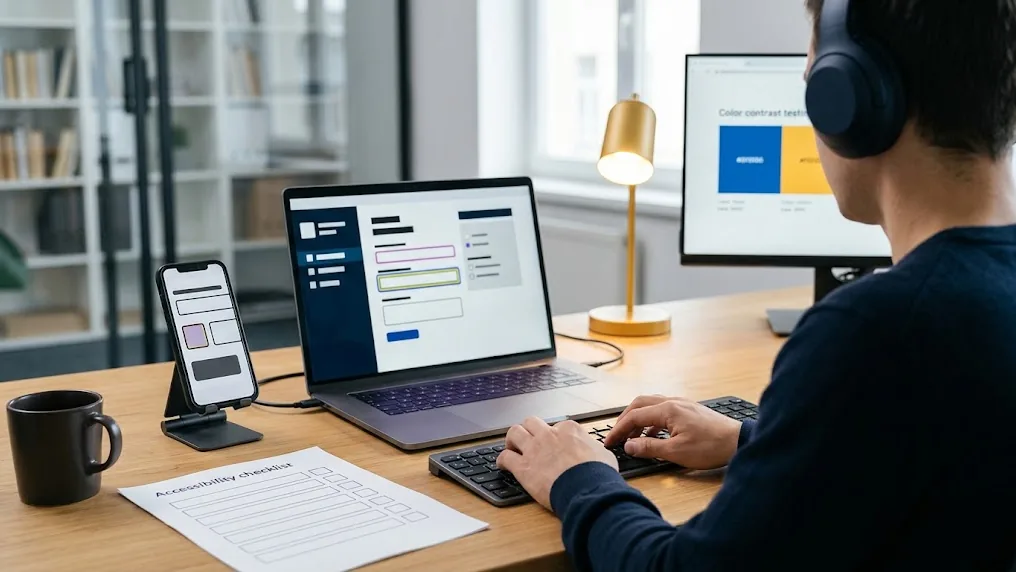
Accessibility testing companies check whether people with visual, auditory, motor or cognitive impairments can use a web or mobile product, a question that functional tests never ask. A form can submit perfectly and still be impossible to complete with a screen reader or a keyboard alone.
Below are the questions buyers raise most often, plus a top 8 of QA providers looking beyond functionality that list accessibility among their services.
Why hire accessibility testing companies if the features already work?
Because working features and usable features are different things. A button with no accessible name, low color contrast or a menu that traps keyboard focus will pass a functional test and still block part of your audience. Specialists also help with compliance: QAlified, for example, ties its audits to legal standards such as the ADA.
There is a design payoff too. QAlified argues that accessible, inclusive design leads to more intuitive interfaces that benefit every user, so fixing contrast, focus order or confusing labels tends to make the product easier for people without disabilities as well.
Which standards should the testing follow?
The common reference is the Web Content Accessibility Guidelines (WCAG). QAlified audits against WCAG and Section 508, and TestingXperts checks compliance with WCAG and ADA. Ask any provider which version and conformance level the report uses, so results can be compared from one release to the next. QualityLogic goes a step further and offers WCAG compliance certification.
The report itself matters as much as the standard. A useful one lists each barrier, the guideline it breaks and a suggested fix. QAlified, for instance, hands clients detailed reports with remediation suggestions, which gives developers something concrete to work from.
Which assistive technologies belong in the test plan?
At minimum, screen readers, screen magnifiers, voice recognition and keyboard-only navigation. QAlified names JAWS and VoiceOver for screen reader checks and also verifies that interactive elements respond to keyboard and voice commands, since some users rely on the keyboard or their voice instead of a mouse. Guides on where user experience begins count accessibility among the factors that make a product easy to use, and assistive technology is where that gets proven.
Test on the devices your users own. A flow that works with a desktop screen reader can still fail on a phone.
Is an automated scan enough?
No. Tools such as AXE and Color Contrast Analyzer, both in QAlified’s kit, speed up the technical diagnosis. Whether a checkout makes sense when read aloud still needs a person, which is why QAlified, for one, combines its tools with manual testing and with input from users with disabilities. Its process runs in three steps:
- Automated review tools produce a first technical diagnosis of the barriers.
- Simulated scenarios reproduce different disabilities to see where the experience breaks.
- The findings are validated against WCAG and other international standards.
Which accessibility testing companies make the top 8?
1. QAlified
From Montevideo, QAlified runs full audits, visual checks of contrast, font size and layout, assistive technology compatibility tests and automated accessibility regression on each update. Its team also consults experts and users with disabilities.
2. QualityAI (formerly Qualitest Group)
Its non-functional practice includes accessibility assessment, compliance validation and inclusive user journey testing across devices and platforms. Healthcare is one of the sectors where it applies accessibility validation as part of compliance work.
3. TestingXperts
TestingXperts sells AI-driven accessibility testing aimed at compliance with WCAG and ADA, next to usability and performance work. The company reports 15 global offices.
4. Testlio
Testlio tests accessibility with assistive tools in varied, real environments through its managed crowd, which spans more than 150 countries, so issues get checked on the kinds of devices real users carry.
5. Applause
Applause has a dedicated accessibility and inclusive design practice and publishes a State of Digital Quality in Accessibility report. It backs that practice with a community of more than 1.5 million testers and end users.
6. TestDevLab
TestDevLab includes WCAG accessibility testing among more than 20 services run by ISTQB-certified engineers, with over 5,000 real devices available for testing.
7. QualityLogic
Headquartered in Boise, Idaho, QualityLogic offers WCAG compliance certification and accessibility services with a fully onshore team of more than 150 US-based experts.
8. a1qa
a1qa lists accessibility testing within its complete test coverage, beside usability, compatibility and localization testing. It has worked as a pure-play testing provider since 2003.
When should accessibility testing start?
As early as the first designs. QAlified notes that issues caught during development are easier and cheaper to fix than those found after release. In practice that means reviewing designs for contrast and focus order, testing components as they are built and running a full audit before each major release. After launch, keep automated regression checks running so each new update keeps the accessibility features working.